
Samsung Strike Threatens Global Chip Supply as Wage Talks Collapse
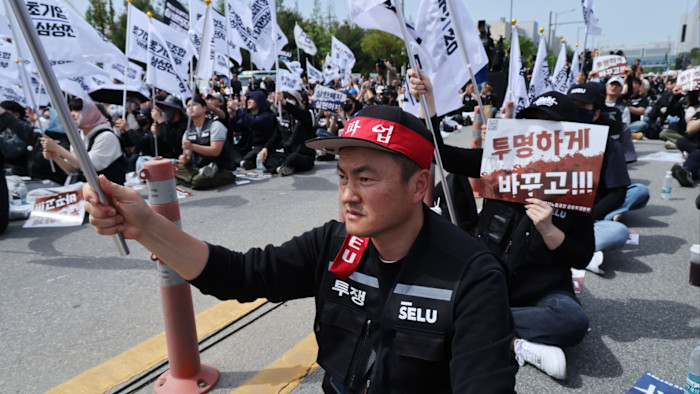
Samsung Strike Raises Fears Over Global Chip Supply Disruption
The growing Samsung strike involving nearly 48,000 workers is raising concerns across the global semiconductor industry after wage negotiations between Samsung Electronics and its labor union collapsed without an agreement. The massive walkout threatens to impact chip production, investor confidence, and South Korea’s broader economy.
Samsung Electronics, the world’s largest memory chip maker, now faces one of the most serious labor disputes in its recent history as tensions continue escalating over employee bonuses and profit-sharing demands.
Why the Samsung Strike Started
The Samsung strike began after union representatives and company management failed to finalize a deal over performance-based bonuses. The union accepted a mediation proposal from South Korea’s National Labor Relations Commission, but Samsung reportedly refused to approve the final terms.
Union leader Choi Seung-ho expressed disappointment after negotiations stalled, saying workers had already made major compromises during discussions. Despite the breakdown, union officials said they would continue trying to reach a settlement even while the strike moves forward.
Samsung responded by calling the union’s demands excessive and warned that accepting them could damage the company’s long-term management structure.
Bonus Dispute at the Center of the Samsung Strike
At the core of the Samsung strike is a disagreement over how bonuses should be distributed among employees.
The union is demanding:
- Removal of Samsung’s 50% salary cap on bonuses
- Performance bonuses equal to 15% of annual operating profit
- A permanent bonus structure instead of temporary agreements
Workers argue Samsung employees deserve larger rewards as the company benefits from booming demand for AI-related semiconductor technology.
Much of the frustration comes from comparisons with rival SK Hynix, whose employees reportedly received bonuses more than three times higher than Samsung workers last year.
How the Samsung Strike Could Affect Global Chip Supply
The Samsung strike has sparked fears of disruption across global semiconductor supply chains.
Samsung plays a critical role in producing memory chips used in smartphones, AI servers, and advanced computing systems worldwide. Any major slowdown in production could worsen existing supply shortages driven by rising AI demand.
Analysts say the immediate impact may remain limited if the strike ends quickly. However, a prolonged shutdown could increase chip prices and create fresh pressure on global technology manufacturers.
South Korea’s central bank reportedly warned that the strike could reduce the country’s economic growth forecast if disruptions continue.
South Korean Government May Intervene
Government officials are closely monitoring the Samsung strike because of its potential impact on the national economy.
South Korea’s labor ministry has considered emergency arbitration measures that could temporarily suspend the strike for 30 days while negotiations continue.
President Lee Jae Myung also criticized some union demands, saying requests tied directly to operating profits before taxes may be crossing a line.
Despite the tension, government mediators are still pushing both sides toward a last-minute agreement.
Investors Worry About Rising Labor Costs
While the strike itself is concerning, many investors are more worried about the long-term financial impact of permanently higher labor costs.
Samsung shares have already fallen this week as uncertainty grows around the company’s future profitability. Analysts believe removing bonus caps could significantly increase operational expenses during future market downturns.
At the same time, Samsung is facing increasing competition in the AI chip market from SK Hynix and other global semiconductor companies.
Some experts believe the labor dispute highlights deeper challenges within Samsung as it attempts to maintain leadership in the rapidly evolving chip industry.
Samsung Strike Becomes a Major Test for the Tech Industry
The Samsung strike is no longer just a local labor dispute. It has become a global story tied to artificial intelligence, semiconductor dominance, and the future of the tech supply chain.
With tens of thousands of workers preparing to walk off the job, investors and governments worldwide are watching closely to see whether Samsung can resolve the crisis before it causes wider damage to the global technology market.
