
Mastery of the Unseen: The Quiet Intelligence That Shapes Power, Influence, and Success
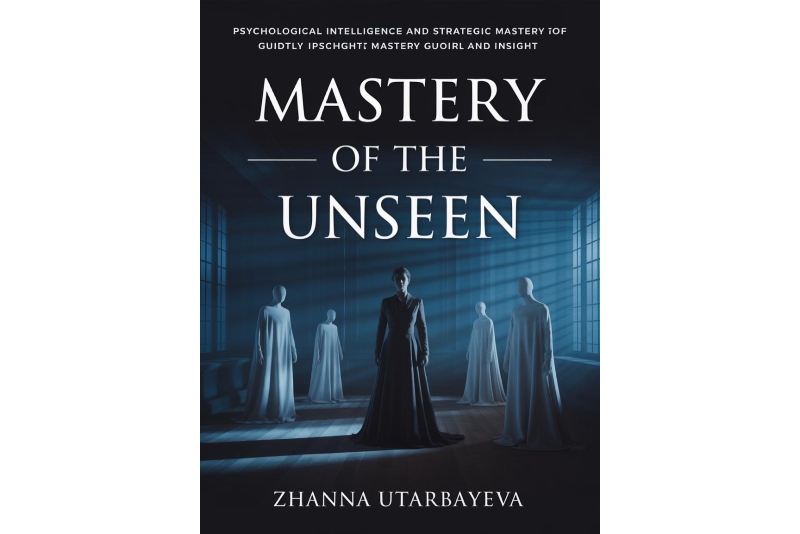
Written by Zhanna Utarbayeva, a keen observer of human behavior and the silent forces that govern influence, Mastery of the Unseen emerges from years of watching people under pressure, moments of power revealed through restraint, and intentions exposed not by speech but by action. Zhanna’s work is shaped by a deep curiosity about what lies beneath words and appearances, and her writing reflects an understanding that true strength rarely announces itself. Through this book, she invites readers into a space of reflection rather than instruction, offering insight drawn from lived observation rather than theory alone.
In the silent spaces between words, in fleeting glances and subtle shifts of posture, a powerful language unfolds. It is a language without sound, yet it governs trust, leadership, relationships, and success. This is the language of psychological intelligence, a form of awareness that transcends conventional communication and reaches into the essence of human connection. As readers step into this book, they stand at the threshold of a transformative journey that reveals the hidden codes shaping behavior and decision making, empowering them to respond with clarity, strategy, and calm mastery rather than impulse.
In a world saturated with noise, rapid reactions, and surface level exchanges, the ability to perceive what lies beneath has become increasingly rare. Leaders struggle to navigate complex social dynamics, individuals grapple with emotional volatility, and relationships often fracture under misinterpretation. Zhanna addresses this modern dilemma by shifting attention away from what people say and toward what they consistently reveal through behavior. She challenges the illusion that words alone convey truth, emphasizing instead the silent patterns that define character.
At its core, Mastery of the Unseen is not about manipulation, shortcuts, or control. It is about discipline, awareness, and ethical understanding. The book reframes psychological intelligence as a profound form of empathy, teaching readers to observe without judgment and to pause before reacting. Influence, Zhanna suggests, is not something that needs to be declared. It is felt, trusted, and respected through presence and restraint.

The journey outlined in these pages begins inward. Before mastering social dynamics, one must master the self. Emotional regulation, intentional silence, and focused attention form the foundation of this work. Readers are guided to distinguish fleeting impressions from consistent character, especially in moments when pressure reveals truth more clearly than words ever could.
Rather than labeling hesitation or withdrawal as deception, the book offers a more nuanced perspective. Such signals may point to emotional distance, internal conflict, or misalignment. Understanding these subtleties allows readers to respond wisely, choosing whether to build bridges or move strategically forward with clarity.
This book is not meant to be consumed quickly. It is meant to be lived with. Some insights resonate immediately, while others unfold gradually through experience. Psychological intelligence, as Zhanna Utarbayeva presents it, is not information to be memorized but a practice to be embodied.
In learning to master one’s responses, emotions, and attention, the world becomes quieter, clearer, and more navigable. And within that clarity lies the unseen power that shapes enduring success.
