
From Whiteboards to AI Command Centers: How a “Data Scientist from a Car Rental Shop” Bridges the Efficiency Gap for U.S. Small Business Owners
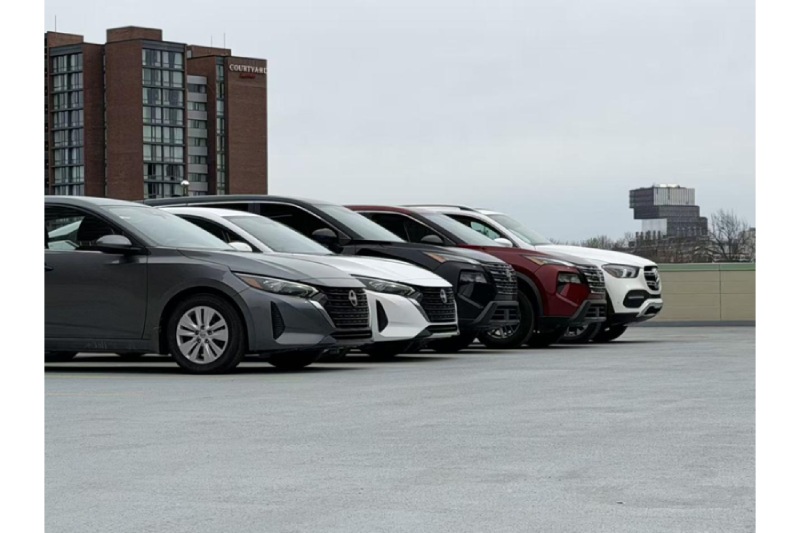
Every morning, as millions of small fleet operators and car rental business owners across the United States begin their day with whiteboards, phone calls, and scattered Excel spreadsheets, a deeper structural economic problem quietly emerges. In an era when AI is redefining logistics efficiency, the small operators that make up more than 90% of U.S. transportation businesses remain largely excluded from the technological dividends of the industry.
Mr. Ziru Wang – a business analyst who has both built rental operations firsthand in garages and leveraged PySpark to process tens of thousands of data records—is now working to close that gap through the platform he created: FleetOps AI.
Wang’s career itself represents a journey of breaking boundaries. During his time as a Business Analyst at the Boston branch of CAC Auto Group, he did far more than theoretical back-office analysis. He personally designed and implemented an entire rental operation framework from the ground up, covering customer data collection, vehicle utilization tracking, lease automation, and monthly performance reporting. He developed semi-automated scheduling models that optimized the matching between reservations and vehicle availability, dramatically reducing idle vehicle time. Through data-driven pricing optimization, he significantly improved per-vehicle profitability. This hands-on experience gave him a deep understanding of the operational pain points faced by small business owners.
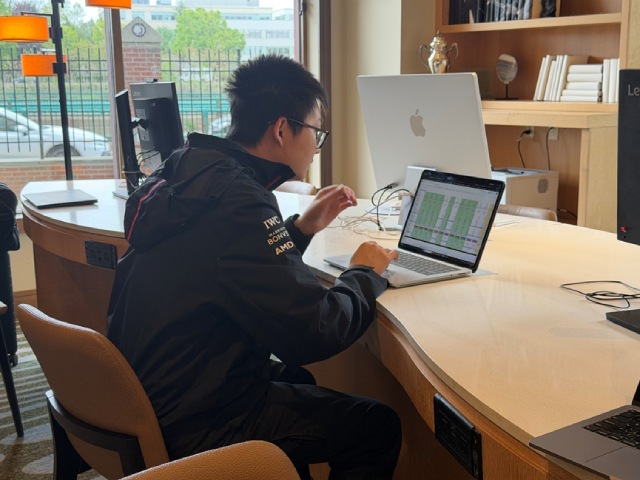
“Most small business owners I’ve met don’t reject advanced technology because they dislike it,” Wang explained. “The reality is that they can neither afford it nor easily use it. They rely on experience, whiteboards, and personal judgment. The multimillion-dollar AI dispatch systems used by large logistics corporations are completely out of reach for them. Meanwhile, the cheaper tools on the market are too fragmented and fail to solve the full operational chain—from pricing and dispatching to maintenance forecasting.”
Wang’s academic background provided the theoretical foundation for addressing this challenge. He holds a Master’s degree in Business Analytics from Clark University and a Bachelor’s degree in Applied Mathematics from Guangzhou University. He is highly skilled in Python, SQL, Spark, Tableau, and other data science technologies. His research achievements have earned recognition from leading international academic conferences. At the 2023 annual conference of the Northeast Decision Sciences Institute, his research project won First Place in the Graduate Student Research Poster Competition. That same year, he presented research on public sentiment analysis surrounding ChatGPT at the annual conference of the Institute for Operations Research and the Management Sciences. In January 2026, he was further recognized for his expertise in AI-driven fleet operations when he was appointed as a peer reviewer for the European Journal of Business, Economics and Management. Together, these accomplishments form the technological and intellectual foundation behind FleetOps AI.
Armed with the operational “pain awareness” gained from years of frontline experience and the “algorithms” shaped by top-tier academic training, Wang launched the FleetOps AI project. He deliberately positioned FleetOps AI as an “AI Operations Command Center” for small businesses, rather than just another feature-heavy management software platform. The system integrates five core modules into a complete intelligent operational ecosystem: an AI-powered dynamic pricing engine that uses machine learning to evaluate vehicle age, mileage, seasonality, and regional demand in order to generate optimal pricing recommendations, increasing per-vehicle revenue by nearly 19%; an intelligent fleet scheduling module that applies semi-automated algorithms to balance reservations, vehicle availability, and maintenance planning, significantly reducing vehicle idle time; a real-time operational dashboard that transforms data into intuitive visual analytics, allowing business owners to instantly understand utilization rates, revenue performance, and other key operational metrics; automated compliance and document-processing functions that generate rental agreements and reports with a single click, greatly improving administrative efficiency; and predictive maintenance alerts that identify potential failures before breakdowns occur, helping operators avoid costly downtime losses.
Unlike many technology products that rely on opaque “black-box” decision-making, Wang emphasized a “zero-code and fully understandable” design philosophy within FleetOps AI. Every pricing recommendation and scheduling adjustment clearly explains the underlying logic, while still allowing managers to modify decisions based on their own operational experience. Starting at a subscription price of just $399 per month, the platform lowers enterprise-grade intelligent operations to a level even a small neighborhood repair shop can realistically adopt.
“A small fleet owner doesn’t need to become a data scientist,” Wang said. “They need a tool that speaks their language, translates complex data into actionable recommendations, and keeps the final decision firmly in their hands.”
From Wall Street to garages, from Bloomberg terminals to handwritten whiteboards, Wang’s cross-disciplinary perspective allowed him to recognize a long-overlooked reality: the infrastructure of global logistics technology has historically favored large corporations, creating a massive efficiency divide. FleetOps AI was built specifically to dismantle that barrier. According to its five-year development plan, the platform aims to serve more than 1,800 small businesses across the United States and generate over $250 million in cumulative added value for those operators.
As Dr. Kaveh Abhari, a professor of digital innovation at San Diego State University, says, FleetOps AI will strengthen the competitiveness of small businesses, accelerate the responsible adoption of artificial intelligence at the grassroots commercial level, and reinforce America’s already fragile supply chain.
When a neighborhood car rental shop in Boston can leverage the same level of sophisticated AI for pricing, dispatching, and maintenance as industry giants, this represents more than simply the democratization of technology. It reflects a redefinition of the American Dream in the digital economy: efficiency should not be reserved for large corporations alone, and resilience must be built from the smallest capillaries of the economy upward.(By Marcus King)
