
From Pain to Purpose: How Ivette Smith Turned Digital Deception into a Mission to Protect Others
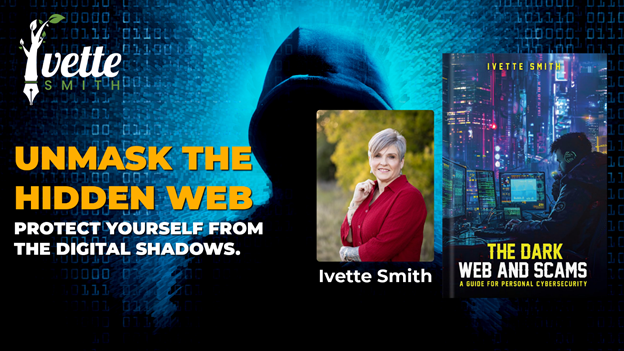
Sometimes the stories that change the world are born not from success, but from scars. For author Ivette Smith, the dark web wasn’t just a topic of curiosity—it was the scene of personal heartbreak. What began as a simple search for remote work turned into a lesson in deception, loss, and ultimately, resilience. Her books, The Dark Web and Scams and The Bipolar Journey Workbook, emerge from two interconnected worlds—one of digital manipulation, the other of mental healing—both driven by her unwavering desire to help others avoid the traps she once fell into. It began innocently enough. After sustaining a serious injury that forced her to leave her physical job in 2020, Ivette decided to look for work she could do from home. With experience, skills, and hope in hand, she uploaded her résumé to several job boards—LinkedIn, Indeed, Monster. Soon, the calls began pouring in. “They sounded so professional,” she recalls. “They had company names, interviews, letters—everything seemed legitimate.”
But what followed was a descent into the murky world of online fraud. One offer asked her to translate documents in Spanish. Another requested that she purchase a special printer and print checks for a company’s clients. Others sent her checks through email attachments—expecting her to cash them and send a portion to a “contractor.” Each one, she later realized, was part of an elaborate scam. “I was trusting,” she admits. “They knew exactly how to talk to you, how to make you believe you were working for something real. Before I knew it, I had given them everything—my social, my bank info, even access to my computer.” What began as a quest for stability ended in chaos. Her bank accounts were compromised twice. She lost thousands of dollars. And most painfully, she lost her sense of safety. “I had to change banks, passwords—everything. They left behind viruses. I couldn’t believe how easily it happened,” she says, her voice soft but firm. “It was personal. It broke my trust in people—and in technology.”
Yet, what sets Ivette apart is not just her survival—it’s her transformation. From the wreckage of deception came her determination to educate others. That determination became the foundation of her book The Dark Web and Scams: A Guide for Personal Cybersecurity, a precisely researched, accessible manual that pulls back the curtain on the invisible web of crime operating beneath our daily clicks. “I wanted to make something that wasn’t written just for IT experts,” she explains. “Ordinary people—people like me—need to understand how these scams work, because we’re the ones they target.” Her book explores everything from phishing and spoofing to ransomware, social engineering, and deepfakes—each explained in language that’s clear and human, not technical. She combines her personal experiences with real-world examples, like the infamous WannaCry ransomware attack, to show how digital crime isn’t an abstract threat—it’s a daily risk. Ivette describes the dark web not only as a dangerous space but as a mirror of human duality. “It’s not all evil,” she insists. “Some people use it for privacy, for safety. But like anything powerful, it depends on who holds it and what they do with it.” Her words echo the book’s introduction, where she writes that technology itself is not inherently dark—it is “the choices of those who wield it” that cast the longest shadows.
Behind the technical insights lies something more intimate. For Ivette, the trauma of being scammed wasn’t just financial—it was emotional. It triggered anxiety, distrust, and a loss of confidence. “When people take advantage of your kindness,” she says quietly, “it hurts your soul.” It was during this emotional aftermath that she began writing The Bipolar Journey Workbook, a greatly personal and reflective guide designed to help others manage mental health challenges. Though not autobiographical, the workbook carries Ivette’s empathy and lived wisdom. “I know what it feels like to lose control of your life, to question your reality,” she explains. “I wanted to make something gentle, something that helps people care for themselves even on the hardest days.” Each chapter of The Bipolar Journey Workbook invites the reader to reflect, write, and reconnect—with themselves, with their triggers, and with their healing. From creating crisis plans to building daily routines, it transforms complex psychology into compassionate conversation. “Self-care isn’t bubble baths and candles,” she says. “It’s learning to forgive yourself, to notice your patterns, to breathe through the storm. That’s real work.”
In the interview, Ivette speaks with the conviction of someone who has walked through both psychological and digital fires. Her experience has made her not only more cautious but also more passionate about spreading awareness—especially among vulnerable groups like the elderly, job seekers, and students. “I wrote this because I know there are others like me,” she says. “People who just wanted to work, who believed in people’s goodness. I lost over $30,000 in one scam because I trusted. If I can save one person from that pain, it’s worth it.” Her words echo the message she hopes readers will take from both books: empowerment through understanding. “Cybersecurity isn’t just about software,” she insists. “It’s about self-awareness. Scammers don’t just hack computers—they hack people’s emotions. Once you learn how they manipulate you, you can protect yourself.” She also warns about the growing threat of AI-driven scams, which use realistic deepfakes and cloned voices to mimic loved ones or professionals—proof, she says, that technology’s progress must be matched by equal progress in ethics and vigilance.
Despite the losses she endured, Ivette’s story ends in resilience. Today, she continues writing and educating, planning follow-up books that combine technical knowledge with real-life cautionary tales. Her hope is to build a community of readers who don’t just fear technology—but use it wisely. “I don’t want people to be afraid,” she concludes. “I want them to be informed. Because once you understand how the dark web works, or how your mind works, you take back your power. And that’s what I did—I took mine back.” Ivette Smith’s journey is more than a warning; it’s a reflection of our era—where danger hides behind glowing screens, and healing begins with awareness. Through her words, she teaches that even in the darkest corners—whether of the internet or the human mind—light is always possible, if you choose to look for it.
