
Devine’s Moments in Time: A Journey of Love, Loss, and Rediscovery
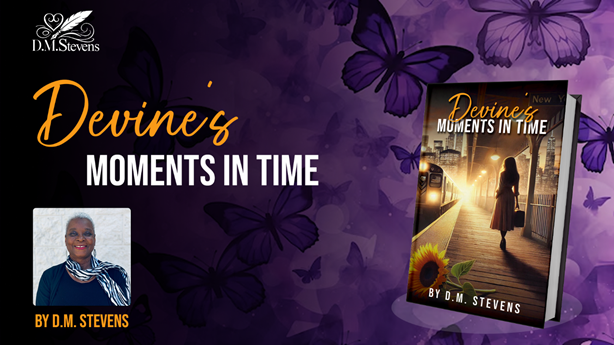
In a sea of debut novels, Devine’s Moments in Time by D.M. Stevens shines with a rare blend of heartfelt storytelling and authentic emotional depth. This novel isn’t just a love story; it’s a thoughtful exploration of grief, mental health, family bonds, and the courage it takes to rebuild after loss.
D. M. Stevens took her writing journal seriously late in life. She credits a senior center writing course for sparking her passion, starting with short stories that soon grew into the novel we have today. While Devine’s Moments in Time is not a direct autobiography, the story is deeply informed by Stevens’ own reflections on life, loss, and resilience. “Most stories are inspired by people you know,” Stevens shares. “I thought of my brother, my friends, and different experiences and wove them into Devine’s journey.”
The novel centers on Devine Sutton, a young woman navigating the complexities of shifting dreams and profound personal loss. Initially drawn to dentistry by a fascination with beautiful smiles, Devine’s path takes an unexpected turn into the world of modeling and later administrative leadership. Her life is forever altered when her father dies suddenly, an event that shakes her foundation and thrusts her into a world filled with grief and uncertainty.
What makes this story stand out is how Stevens confronts the emotional aftermath of loss without shying away from its messiness. Through Devine’s internal struggles—her anxiety and reliance on what Stevens calls “little white pills” to manage life’s pressures—the novel addresses mental health with honesty and compassion. It’s a raw, real depiction that many readers will find deeply relatable.
Yet, Devine’s Moments in Time is not only about sorrow. At its heart is a love story that transcends time and distance. Devine unexpectedly reconnects with Madison, her childhood sweetheart, during a chance encounter on a New York City train. Their reunion is more than a nostalgic fling—it’s a rekindling of a spiritual connection that had been quietly burning for years. “They always had that connection,” Stevens explains. “It wasn’t just a regular romance; it was something deeper and lasting.”
Adding richness to the narrative are the secondary characters who provide warmth and support. David, Devine’s devoted brother, steps up as a pillar of strength after their father’s death, embodying the importance of family loyalty and love. Brenda, Devine’s best friend, symbolizes unwavering friendship, showing readers how vital it is to have people in your corner during life’s hardest moments. These relationships underscore one of the novel’s key themes: healing is often a communal journey.
New York City itself feels like a character in the book, shaping Devine’s experiences and symbolizing both struggle and possibility. As a native New Yorker, Stevens draws on her intimate knowledge of the city’s tougher neighborhoods, where drugs, incarceration, and lost hope were common. “I grew up in a place where a lot of people lost hope,” she says. “Some made it out, many didn’t. That tension runs through the story.”
The novel beautifully balances heavy emotional themes with moments of humor and hope. Stevens says, “Once I started writing, it just flowed. I wanted to make sure the story felt real.” And real it is—the book reads like a lived experience, with authentic dialogue, vivid characters, and a storyline that captures the unpredictability of life.
One of the book’s strengths lies in how it portrays Devine’s personal growth. From the shy, cautious girl who initially doubts herself to a confident woman embracing new opportunities, Devine’s transformation is inspiring. Her journey is punctuated by challenges—family loss, anxiety, career shifts—but also by small victories that give hope. It’s a reminder that resilience isn’t about avoiding hardship but learning to move forward despite it.
Stevens also highlights the role of mental health candidly, a topic often glossed over in romance novels. Devine’s use of medication to cope with anxiety is presented not as a weakness but as a realistic coping mechanism. This honest portrayal invites empathy and opens a conversation about the struggles many face silently.
Another compelling aspect is how Stevens uses the setting to reinforce themes. New York City, with its energy, dangers, and opportunities, mirrors Devine’s internal landscape. It’s a place of contrasts—where dreams can be born and crushed in the same breath.
Though this is Stevens’ first novel, her writing reflects a maturity and confidence that suggest a seasoned storyteller. She is already working on new projects, including young adult fiction and poetry, signaling a versatile creative future.
For readers who seek stories that go beyond surface-level romance, Devine’s Moments in Time offers a richly textured narrative. It’s a book that doesn’t shy away from life’s complexities but embraces them with grace and hope. Stevens’s debut is an example of how storytelling can heal, inspire, and connect us all.
In a world where many love stories feel fleeting, this novel stands out as a poignant reminder that love, grief, and hope often live side by side—and that every moment counts.
