
A Life of Faith, Caregiving, and Spiritual Resilience
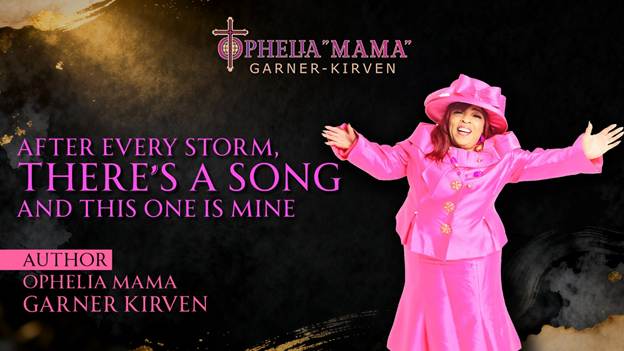
Ophelia was born on August 23, 1948, in rural Georgia, the fourth of eight children. From birth she lived with scoliosis, a condition that made her noticeably smaller than her peers and caused mobility limitations. Her childhood was marked by poverty and social ridicule, particularly from neighborhood children who mocked her physical differences. These early experiences of exclusion and humiliation sharply shaped her sense of identity and her later commitment to treating others with dignity.
A pivotal moment occurred when, at age five, after being teased during a game with neighborhood children, Ophelia sought comfort beneath a sycamore tree. There she encountered a local church musician who comforted her, affirmed her beauty, and taught her the hymn “Yes, Jesus Loves Me.” This moment introduced Ophelia both to music and to the spiritual foundation that would anchor her life. The musician eventually invited Ophelia and her mother to church, provided her with clothing, and nurtured her early musical gifts. Ophelia soon began singing in the children’s choir, marking the beginning of her lifelong relationship with gospel music.
Throughout her youth and adulthood, Ophelia developed a reputation as a gifted singer with a unique emotional range. She later performed with her children under the name Timothy Garner and The Travails, traveling throughout the United States for over 36 years. For Ophelia, music was not merely performance—it was ministry, testimony, and spiritual survival. She describes every song she sings as “a storm chaser,” capable of dissolving emotional pain and reaffirming divine presence.
Her son Timothy, whom she regarded as a musical prodigy, possessed what she described as a seven-octave vocal range and an intuitive ability to play instruments. His passing in 2012 marked one of the most devastating storms of Ophelia’s life. Yet even in grief, she reports experiencing profound spiritual encounters that renewed her sense of mission and inspired new forms of ministry.
Following her son’s death, Ophelia believed she received a divine instruction to “finish everything you started.” Unable to attend a physical church while caring for two disabled family members at home, she built a sanctuary in the hallway of her home, where she led weekly worship services for her husband and son. These intimate meetings—filled with hymns, testimony, and communal prayer—became the conceptual foundation for her forthcoming book Churching with Mama After the Storm.
The book chronicles her journey through loss, disability, caregiving, faith, and resilience. It positions storms not as punishments, but as divine preparation. Through personal narrative and spiritual reflection, Ophelia encourages readers to reclaim their identity, confront internalized unworthiness, and persevere through adversity with grace.
For decades, Ophelia has served as the primary caregiver for multiple family members, including her mother, son Timothy, husband Johnny, and her younger autistic brother. She cared for her mother for ten years until her passing in 2009, a promise she made out of gratitude for her mother’s unwavering protection during childhood. Today, she continues to provide full-time care for her brother, honoring a vow to keep him safe at home.
In recounting these responsibilities, Ophelia emphasizes that caregiving is both an act of obedience and an expression of love. She rejects external pressures to institutionalize her loved ones, stating that “someone once cared for me; now I care for them.”
After witnessing the lack of recognition given to overlooked gospel musicians—including her son—Ophelia created the Gospel Living Legends Music Awards (GLLMA). She intended the platform to honor artists who dedicated their lives to ministry without receiving visibility, compensation, or acknowledgment from major music institutions. The GLMA’s purpose, she explains, is to “give people their flowers while they live,” celebrate their contributions, and inspire future generations to pursue excellence without chasing fame.
Although the initiative faced resistance within the industry, Ophelia continues to view the GLMA as a vital part of her calling and expresses plans to revive it when the timing aligns with her spiritual guidance.
Central to Ophelia’s life and work is the belief that every storm carries spiritual purpose. Her memoir and ministry emphasize forgiveness, resilience, humility, and the importance of rejecting societal attempts to diminish one’s identity. She credits her survival through emotional, physical, and spiritual hardship to her personal relationship with Jesus and the sustaining power of worship.
Ophelia also advocates for kindness as a transformative life practice, recalling a childhood poem that became her lifelong moral compass: “Don’t give what you can’t take… be as sweet as you can.” She promotes forgiveness as a spiritual and physical necessity, asserting that bitterness harms the body while forgiveness restores it.
At age 77, Ophelia remains active in ministry. She recently celebrated eight years of her online broadcast Churching with Mama After the Storm, continues recording a cappella hymn projects, and aspires for her book to reach readers internationally, including translations into French and Spanish. She envisions her story offering strength to caregivers, believers, and anyone navigating emotional or spiritual storms.
Ophelia’s message, rooted in faith and lived experience, is one of perseverance: no matter the storm, identity and destiny are shaped not by suffering, but by the decision to rise.
