
Dr. Qaali Hussein & Defiance Academy: Rewriting the Rules of Ambition for Women Who Refuse to Burn Out
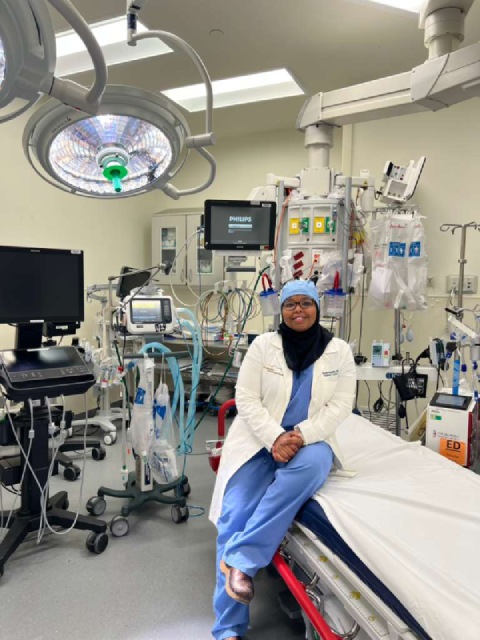
What if the problem isn’t that women can’t “do it all”…
But that they were never meant to?
For decades, high-achieving women have been given a familiar formula for success: work harder, stretch further, prove more. And when that formula leads to exhaustion, the solution offered is almost always personal. Better time management. More resilience. A stronger ability to “balance” competing demands.
Dr. Qaali Hussein challenges that narrative at its core.
A double board-certified trauma surgeon, mother of six, and founder of Defiance Academy, Dr. Hussein has spent over a decade working in one of the most high-stakes environments imaginable. In trauma care, there is no room for illusion. Burnout is not abstract. It is measurable. It shows up in performance, in clarity, and in patient outcomes.
That experience fundamentally reshaped how she understands burnout.
Not as a failure of discipline, but as a signal.
Not as something to fix within individuals, but something to redesign around them.
Her work now sits at the intersection of medicine, leadership, and workplace culture, offering a perspective that cuts through the noise of traditional “wellness” advice. Because the issue, as she frames it, is not that women lack ambition or capability.
It is that they have been expected to carry everything.
“The reality is that women aren’t just climbing the same ladder as men,” Dr. Hussein explains. “They’re climbing a broken career ladder that doesn’t account for a woman’s biological timeline, while also carrying the bulk of caregiving at home, often without meaningful support, and still being praised for ‘doing it all.’”
She continues, “No wonder we’re burning out and leaving the workforce. And we will continue to do so as long as we keep following traditional career advice that refuses to acknowledge this reality.”
Across industries, the data reflects what many women already feel. Burnout rates are consistently higher among women than men, driven not by a lack of capability, but by a fundamentally unequal distribution of expectations both inside and outside the workplace.
Yet much of the existing advice continues to reinforce the same model.
The “superwoman” narrative, often framed as empowerment, asks women to operate at full capacity across every domain. Career. Caregiving. Emotional labor. Leadership. It expands expectations without expanding support.
Dr. Hussein’s approach does not attempt to optimize that model.
It replaces it.
Through her Defiance framework, she introduces a fundamentally different way of operating. One that prioritizes precision over pressure, alignment over overextension, and intentional decision-making over constant sacrifice.
Defiance, as she defines it, is not about rebellion.
It is about clarity.
It is the ability to recognize what no longer serves you and make deliberate decisions about how you move forward.
That philosophy is the foundation of Defiance Academy, a platform designed for high-achieving women who want to advance their careers without sacrificing their values, their families, or themselves.
Inside the program, the focus is not on doing more.
It is about doing things differently.
Participants learn how to make higher-leverage decisions about their time, boundaries, and career trajectory. They stop trying to fit into systems that were never designed for them and begin building careers that are both high-performing and sustainable.
The goal is not survival.
It’s control.
It’s sustainability.
It’s long-term success without burnout.
What makes Dr. Hussein’s work resonate is that it is grounded in lived experience, not theory.
She has navigated the tension between professional excellence and personal responsibility in one of the most demanding fields in the world. She has experienced the pressure, the expectations, and the constant trade-offs firsthand.
And instead of accepting those constraints, she built a different model.
Today, that perspective has made her a sought-after voice among organizations, universities, and leadership teams rethinking the future of work.
As a keynote speaker and workshop leader, Dr. Hussein brings a rare combination of clinical precision, cultural awareness, and strategic clarity. Her sessions go beyond motivation. They challenge institutions to confront the structural drivers of burnout and rethink how performance, retention, and leadership are designed.
Her message is clear: burnout is not simply a workload problem.
It’s a systems problem.
Workplace cultures that reward overextension, penalize flexibility, and ignore caregiving realities are not neutral. They are actively shaping who advances and who burns out.
Dr. Hussein’s work invites leaders to build environments where high performance and well-being are not in competition but aligned.
Her perspective is also shaped by identity.
As a Muslim Somali woman, her approach to ambition is rooted in intention, alignment, and purpose, rather than constant output. It reframes success not as doing more but as doing what matters most.
This is not about stepping away from ambition.
It’s about redefining it.
Because the future of work is no longer just about productivity.
It’s about longevity.
It’s about sustainability.
It’s about designing systems where people can perform at a high level without sacrificing their well-being in the process.
Dr. Qaali Hussein is not waiting for that shift to happen.
She is already building it.
And in doing so, she is offering a new path forward for women who are no longer willing to succeed at the cost of themselves.
Because the question is no longer whether women can do it all.
It is whether the system is finally ready to evolve.
And if it is not, Dr. Hussein has made one thing clear:
You do not wait for permission.
You build something better.