
She Leads, She Operates: How One Entrepreneur Built a Piercing Jewelry Empire in North America
Under the bright lights of international jewelry exhibitions, Huang Chunmei moves easily between conversations with global retailers. At her company’s booths, she represents a growing portfolio of body-piercing jewelry brands, discussing distribution, design direction and market trends with the calm confidence of a seasoned entrepreneur.
Behind the scenes, her work looks very different.
On the back end of brand websites, Etsy storefronts and TikTok sales dashboards, she studies conversion metrics and customer data. In production facilities in Qingdao, she walks factory floors, inspecting finishing details and monitoring manufacturing processes. At Amazon seller conferences, she appears on stage as an industry speaker, sharing strategies for brand building and cross-border e-commerce.
Huang is not simply a figurehead of a jewelry brand. She is the architect of an ecosystem — one that spans design teams, manufacturing lines, global logistics networks and sophisticated customer-management systems.
As the founder and chief executive behind multiple body-piercing jewelry brands, including OUFER, Huang has helped turn a niche segment of metal accessories into a rapidly expanding global business. Her work reflects a rare combination in a single entrepreneur: the strategic discipline of an operator, the instinct of a brand builder, and a keen understanding of subcultural fashion trends.
Huang currently serves as Chief Executive of several companies, including Oufer Inc. and S&L Forever International Co., Ltd., both of which operate in the global piercing-jewelry trade.
Over the past decade she has overseen the development of a vertically integrated business model—one that links product development, manufacturing, cross-border e-commerce and after-sales service into a single coordinated system.At the center of that system is a design team she personally assembled. The group produces more than 50 new pieces each week for the OUFER brand alone, drawing inspiration from geometric forms, natural motifs and symbols rooted in youth subcultures.
That rapid cadence has allowed the brand to build a fast-moving product pipeline rarely matched in the niche piercing-jewelry sector.Several designs have become runaway hits among North American consumers, including pieces such as the Star Curved Titanium Eyebrow Ring, Titanium CZ Hinged Segment Nose Ring, and the Bubble-Star Stud Earrings set.
Recently, Huang’s team collaborated with Universal on a licensed jewelry line inspired by Wicked, introducing the “Wicked for Good” series—a collection that quickly attracted attention from film fans and fashion-forward piercing enthusiasts alike.
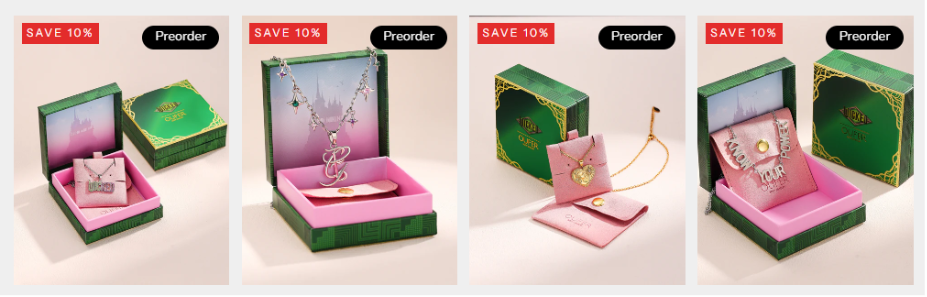
OUFER x Wicked collaborative jewelry collection
Body-piercing jewelry is not merely decorative; it is worn directly on or through the skin, making safety and material quality central to the business.
Huang has made medical-grade metals a defining feature of her brands. Many of the products are made using ASTM F136 implant-grade titanium—the same material commonly used in surgical implants—as well as 14-karat and 18-karat gold.
In the company’s manufacturing workshops, Huang often reviews finishing details personally, paying particular attention to polishing, beveling and smoothing processes that determine whether a piece can be worn comfortably for long periods.
The emphasis on hypoallergenic materials and precision finishing has helped build strong consumer trust. High repeat-purchase rates and favorable customer reviews have become hallmarks of the OUFER brand in North American online marketplaces.
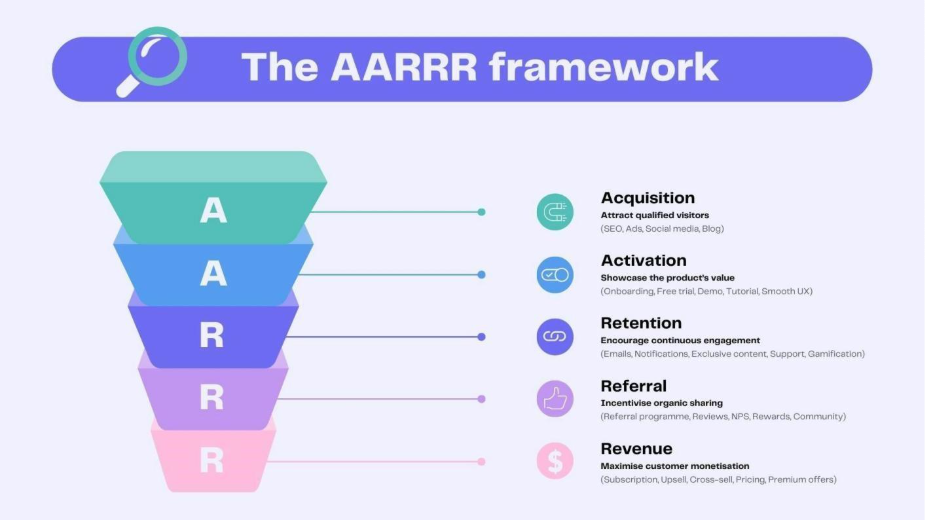
AARRR user operation system
For Huang, product development is only one part of the equation. Equally important is the long-term relationship with customers.
To manage that relationship, she introduced a full AARRR lifecycle model—a framework widely used in digital startups that tracks a user’s journey from acquisition to activation, retention, revenue generation and referral.
Her team built loyalty systems and membership programs tied to that model, offering tailored benefits depending on customer behavior and purchasing patterns.
Through continuous monitoring of user data and feedback, the company has refined everything from checkout flows to after-sales response times.
The results have been striking. According to company figures, OUFER’s member repurchase rate is 62 percent higher than that of non-members, while more than 28 percent of new customers arrive through referrals from existing buyers. The brand’s average customer lifetime value stands roughly 45 percent above the industry average, an advantage that has helped sustain growth even as online advertising costs rise sharply in North America.
Huang’s influence extends beyond her own companies.
In April 2023, she was invited to speak at the Amazon Shandong Seller Summit, where hundreds of cross-border e-commerce merchants gathered to exchange strategies on global expansion.
Huang Chunmei (ninth from left) at the Amazon Shandong Seller Summit
Her presentation focused on the operational logic behind her brands’ success: building fast design cycles, organizing global logistics networks and structuring user-data systems that support long-term customer engagement.
One principle she emphasized resonated widely with the audience: segment the users first, then build products for them, rather than flooding marketplaces with undifferentiated inventory.
Several businesses that attended the summit later adopted similar frameworks.
One Qingdao-based accessories company, previously struggling with a repeat-purchase rate of about 8 percent, reorganized its customer database using the AARRR model and introduced tiered loyalty benefits. Within six months, its repurchase rate rose to 23 percent.
Another firm, Yantai Muhe International Trade, restructured its design workflow after studying Huang’s approach. Instead of launching large numbers of untested products, the company began testing small batches of 20 to 30 styles weekly, guided by market research and customer feedback. At the same time, it reorganized its logistics strategy by distributing inventory across Amazon warehouses in the United States and Europe, reducing delivery times from several weeks to less than a week.
The shift helped the company raise its new-product success rate from 25 percent to 58 percent and achieve a fulfillment rate of more than 92 percent during the 2024 North American peak sales season.
Today Huang remains deeply involved in the day-to-day evolution of the brands she built. She continues to push her teams to explore new forms of piercing jewelry while refining customer service systems and warranty policies that support long-term brand loyalty.
In an industry where trends shift quickly and competition is fierce, Huang’s approach has remained grounded in execution: thoughtful product development, rigorous quality standards and a relentless focus on the customer.
For a generation of entrepreneurs navigating the complex world of cross-border e-commerce, her story offers a blueprint—not just for building a brand, but for sustaining one. (By Ivana)
