
Chris Sneed of SneedSpeed Explains Why Engines Fail in Real Life (Not on the Dyno)
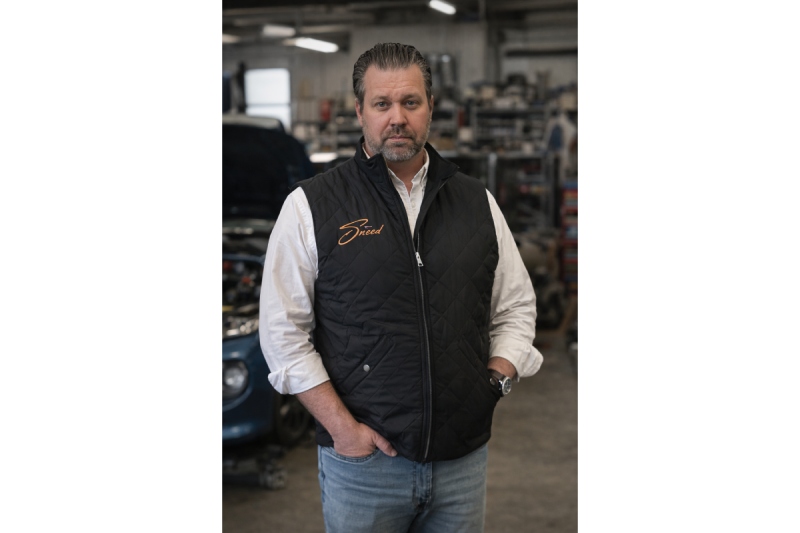
Most engines don’t fail doing something heroic. They don’t grenade at redline or die mid–pull on a dyno. They fail quietly. In traffic. After months of heat cycles. On a random Tuesday morning when the car is doing exactly what it was “designed” to do.
That uncomfortable reality is where Chris Sneed, founder of SneedSpeed, has built his entire career.
Sneed doesn’t explain failure from theory. He explains it from consequence.
He’s been the driver who pushed a car hard enough to expose weak assumptions. He’s been the engine builder who built it “right on paper,” and then watched it fail after time, heat, and real use. And he’s been the shop owner who had to tear it back down, diagnose the issue, explain it to the customer, fix it, and sometimes eat the cost when the idea didn’t survive reality.
That loop matters. Drive. Build. Fail. Rebuild. Repeat.
It teaches you things no simulation, vendor pitch, or dyno sheet ever will.
For more than 25 years, Chris Sneed has lived in the gap between how engines are supposed to work and how they actually behave once they leave the shop. He’s not an analyst watching from the outside. He’s the person who raced the car, built the engine, and then had to answer when popular OEM replacement logic or aftermarket shortcuts didn’t hold up on the street or the track.
What Sneed specializes in isn’t dramatic failures. It’s the boring ones that cost people the most money.
Repeated heat cycles. Long-term stress loading. Daily-driver misuse. Track days stacked on top of commuting. The exact conditions most components are never truly designed for, but almost every performance car eventually lives through.
This is why Sneed has little patience for peak numbers and internet certainty. Engines don’t die because of one hard pull. They die because small compromises stack up over time. Cooling systems that work until traffic becomes part of the equation. Parts that pass testing but fail after months of expansion and contraction. Cost-saving decisions that look smart until they aren’t.
At SneedSpeed, the work happens upstream of hype. Instead of chasing trends, Sneed breaks down why a part was spec’d the way it was, what assumption it relied on, and where that assumption falls apart in real use. Then he rebuilds the system the way it should have been built in the first place.
Street cars. Race cars. Everything in between.
What makes his voice trusted is accountability. Sneed documents builds and failures publicly. If a part doesn’t work, he says so. Even if it’s something he built himself. That honesty is rare in an industry where most stories stop the moment the dyno graph looks good or a failure accrues.
It’s also why media outlets turn to him when they want answers instead of noise.
Editors and podcasters don’t call Chris Sneed for trend commentary. They call him when the same engine keeps failing in the real world. When OEM logic doesn’t survive ownership. When something works perfectly in controlled testing but falls apart once customers start driving it the way cars are actually driven.
As a championship-winning driver, Sneed understands what the system was asked to do. As an engine and car builder, he understands how it was assembled and why. As a shop owner, he understands what broke, how often it breaks, and who pays when it does.
That combination produces insight rooted in repetition, consequence, and responsibility. Not opinion. Proof.
“I rebuild OEM systems to survive and win in the real world conditions our customers use them in,” Sneed says. “Street, race, and everything else.”
In a space obsessed with numbers and hype, Chris Sneed represents something rarer and more valuable. Experience that has been tested, broken, rebuilt, and proven again.
Learn more at https://thechrissneed.com and see documented builds at https://sneedspeed.net/.
