
Dr. Willis Wainwright’s Journey of Faith, Service, and Resilience
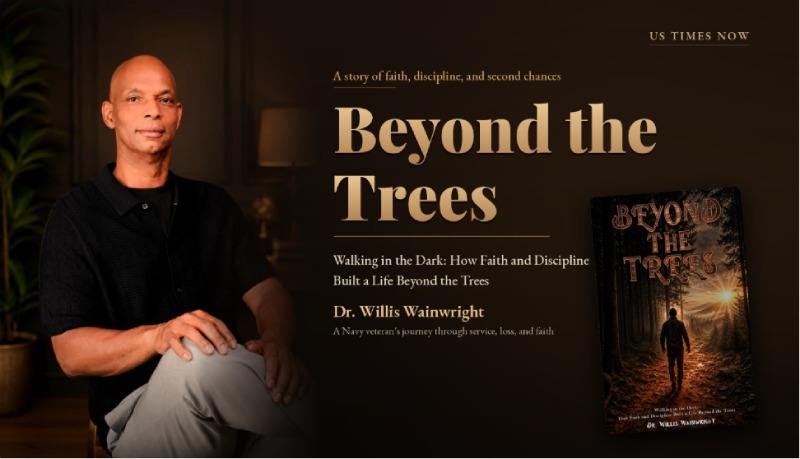
For Dr. Willis Wainright, Beyond the Trees is more than a personal story. It is a reflection on faith, perseverance, adversity, family, and the search for purpose. Drawing from experiences that span childhood, military service, education, business, and personal hardship, Wainright has transformed the difficult chapters of his life into a message intended to encourage others facing their own challenges.
Wainright grew up in Marion, Louisiana, a small community where family, faith, and hard work were central parts of everyday life. Raised in a household of eight on a farm, he remembers a childhood filled with country experiences, family activities, and the challenges that came with growing up in a close-knit rural community. Faith was also deeply embedded in his upbringing, with his family maintaining a strong religious foundation.
His path took a dramatic turn when he entered the military. Before beginning his Navy career, Wainright experienced a serious horseback-riding accident that left him with multiple injuries, including broken legs, a wrist, fingers, and ribs. At the time, his greatest concern was whether the accident had ended his plans for a Navy career. Instead, the experience strengthened his faith and became one of the defining moments of his life.
Wainright went on to serve 32 years in the Navy, eventually rising from fireman to chief warrant officer. His military career demanded discipline, persistence, responsibility, and the ability to continue moving forward despite difficult circumstances. Looking back, he credits discipline, persistence, and goal-setting as important elements of his journey. His philosophy is straightforward: establish goals, write them down, develop a plan, and remain willing to adjust that plan when circumstances change.
A Lifelong Calling to Serve
Wainright’s commitment to service extended beyond his military career. His interest in theology began when he was young, when he says he committed his life to God and envisioned eventually helping others find their own relationship with faith.
His academic journey later led him to Liberty University, where he earned a bachelor’s degree in religion and pursued graduate studies in theology. An unexpected change in his academic path ultimately resulted in two master’s degrees as he prepared for doctoral study. His educational experience became another part of his preparation for a life centered on service, faith, and helping others.
That sense of calling remained with him for decades. Eventually, after experiencing a period in which many aspects of his life seemed to be falling apart, he says he recognized the importance of putting God first and allowing faith to guide his decisions. His practice of turning to prayer during both good and difficult days became a central part of his outlook.
Turning Hardship Into a Message
One of the defining characteristics of Beyond the Trees is Wainright’s willingness to discuss difficult experiences rather than presenting only the successes of his life. He openly addresses challenges involving debt, bankruptcy, divorce, business difficulties, and other setbacks.
These experiences became an important reason for writing the book. Wainright believes that someone reading his story may recognize their own circumstances within it and realize that difficult seasons do not mean they are alone. Rather than hiding the chapters of his life that were painful or difficult, he chose to discuss them and use them as lessons.
His approach is not to suggest that adversity is easy. Instead, he emphasizes the importance of continuing forward, reassessing circumstances, setting goals, and maintaining faith when the future is uncertain. For Wainright, adversity is not evidence that a person’s journey has ended. It can instead become an opportunity to rebuild and move forward with a stronger foundation.
Looking Beyond the Trees
The title Beyond the Trees comes from Wainright’s childhood memories in Louisiana. As a young boy, he would lie beneath the loblolly pine trees near his home and watch the branches move in the wind. Looking upward through the trees, he imagined what might exist beyond them and wondered what his future could hold.
Those childhood moments of imagination eventually became a metaphor for his life. Looking beyond the trees represents seeing past immediate circumstances and believing that something greater may exist beyond the challenges directly in front of you.
The concept also reflects the book’s broader message. Circumstances may limit what someone can see at a particular moment, but they do not necessarily determine what lies ahead. Wainright encourages readers to consider possibilities beyond their present situation and to keep moving toward a future they may not yet be able to clearly see.
A Legacy Built on Faith
Wainright’s vision of legacy is also central to the book. Rather than measuring generational wealth primarily through possessions, financial accounts, or material success, he emphasizes the spiritual foundation he hopes to pass to his children and grandchildren.
His “legacy plan” is presented as guidance for future generations, with faith serving as the most important inheritance he wants to leave behind. For Wainright, legacy is not simply about what a person accumulates during life, but also about what values, lessons, and principles remain after they are gone.
Another powerful influence was his mother, whose disciplined household routine helped shape Wainright long before he entered the military. He later recognized similarities between the structure of his childhood home and the discipline required in military life. That realization helped him understand that many of the habits that contributed to his later resilience had been developed during childhood.
Sharing a Story of Resilience
After retirement and decades of overcoming personal and professional obstacles, Wainright decided it was time to put his experiences into writing. He describes the book as an opportunity to share what he believes God has brought him through rather than keeping those experiences to himself.
Ultimately, Beyond the Trees is presented as a message of companionship and hope. Wainright wants readers to understand that they are not alone when facing difficult circumstances. His story encourages readers to look beyond immediate setbacks, maintain faith, establish meaningful goals, and continue moving forward.
Through Beyond the Trees, Willis Wainright turns decades of service, hardship, faith, education, family experiences, and personal reflection into a story designed to reach people from different walks of life. His journey demonstrates how difficult experiences can become lessons when they are viewed through the lens of faith and perseverance.
His central message is simple but enduring: even when the path ahead is difficult to see, there may still be something worth discovering beyond the trees.
