
Inside UN Reform: Lessons learned Across the United Nations
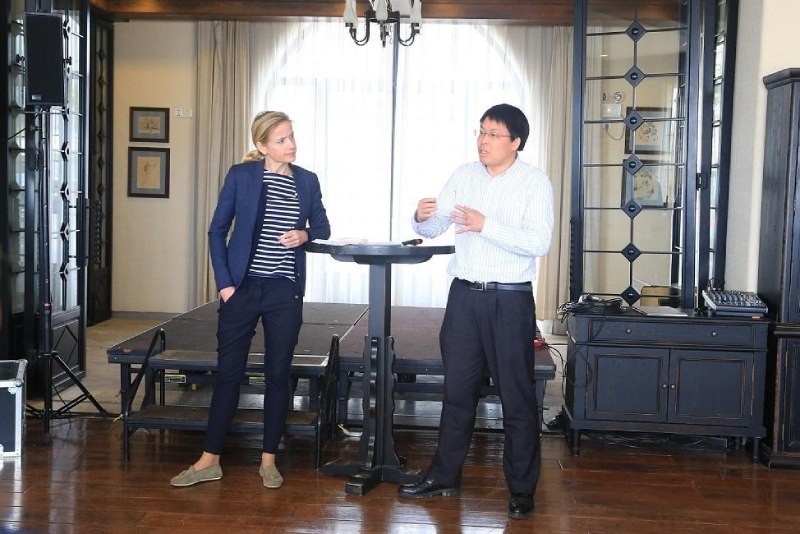
For Lisa Emelia Svensson, the debate about reforming the United Nations is not an abstract discussion about organizational charts or administrative efficiency. It is something she has encountered from different sides of the system through her experience working both within the UN and through her work with Member States.
Her experience has given her a close view of one of the central challenges facing the organization: understanding where political decisions should be made, where implementation decisions should sit, and how the two can work together.
“Its easy to state that the United Nations reform must lead to efficiency,” she says. “But translate this into practice from an organizational point of view is more of a challenge. Member States are to be responsible for deciding what the United Nations might do, and the Secretariat might decide how to implement those mandate given to the institution. Holding the leadership accountable to deliver on mandates given appears to be a central element.
For Lisa, the distinction is important.
Member States determine the political priorities of the organization and the mandates they want the United Nations to pursue. Once those decisions have been made, the Secretariat and its management have an important role in determining how the work can be delivered effectively and within available resources. Translate mandate into implementation requires leadership.
Her experience has shown her that the relationship between these two responsibilities can become complicated.
Seeing the system from different perspectives The scale of the United Nations system makes this challenge particularly difficult.
Over eight decades, the organization has accumulated more than 40,000 mandates. Thousands of meetings take place each year, while responsibilities are distributed across departments, programmes, agencies, funds and specialized organizations.
The UN80 process has brought renewed attention to this complexity, including the need to review existing mandates and consider how resources are aligned with priorities.
But reviewing mandates is only part of the challenge. The more difficult question is often what happens when priorities compete.
Governments understandably have different areas of responsibility. Environment officials focus on environmental issues. Development officials focus on development. Human rights specialists focus on human rights. Each perspective is legitimate and often highly specialized.
The difficulty comes when those individual perspectives need to be brought together into a systemwide view.
As Lisa observes, governments do not all have the same resources or capacity to follow every UN process and organization. Smaller governments may have limited staff available to monitor developments across the system. Larger governments may have greater capacity, but that does not automatically translate into coordination across different ministries and areas of expertise.
Diplomats therefore have an important role in connecting these perspectives, building alliances across regions and maintaining an understanding of evolving positions and processes.
For Lisa, this is one of the less visible but important dimensions of international diplomacy: translating technical expertise into an understanding of wider political priorities.
From political priorities to implementation
Her experience also highlights the role of the Secretariat.
The Secretariat does not determine the political priorities of Member States. Nor does it decide which mandates governments ultimately retain or change.
But it can contribute information, analysis and institutional knowledge that help governments understand the consequences of different choices.
Once political priorities have been established, Lisa sees an important role for management in determining how those priorities can best be implemented.
That can involve very practical questions.
Can overlapping functions be consolidated? Can reporting requirements be reduced? Can administrative services be shared? Can digital systems replace repetitive
processes? Can resources be moved from lower-priority activities to areas where they are more needed?
These questions may sound administrative, but Lisa’s experience suggests that they are closely connected to leadership.
Reform requires decisions at an aggregated level, while implementation eventually reaches experts, departments and people working at the operational level.
The challenge is connecting the two.
The importance of leadership during change
For Lisa, that connection makes leadership particularly important during periods of institutional change.
Member States negotiate and agree on mandates. The Secretariat then has to translate those mandates into implementation.
That requires clarity about roles, but also accountability.
The experience has left Lisa with an appreciation of the complexity of reform inside a large international organization. Change is not simply a matter of creating a new structure or removing an old one. It requires political direction, institutional knowledge and the ability to carry decisions through to implementation.
Her perspective on UN reform therefore comes less from theory than from having observed how the system works from different positions.
The broader lesson she draws from that experience is that effective reform depends on understanding both sides of the equation: the political choices made by Member States and the institutional responsibility for turning those choices into results.
As the United Nations considers its next phase of reform, Lisa’s experience provides a perspective shaped by having seen the organization from within and having worked with the governments that ultimately shape its political direction.
