
Mohsen Avid’s Analysis of the E-E-A-T Framework: Why Google No Longer Pays Attention to Anonymous Content
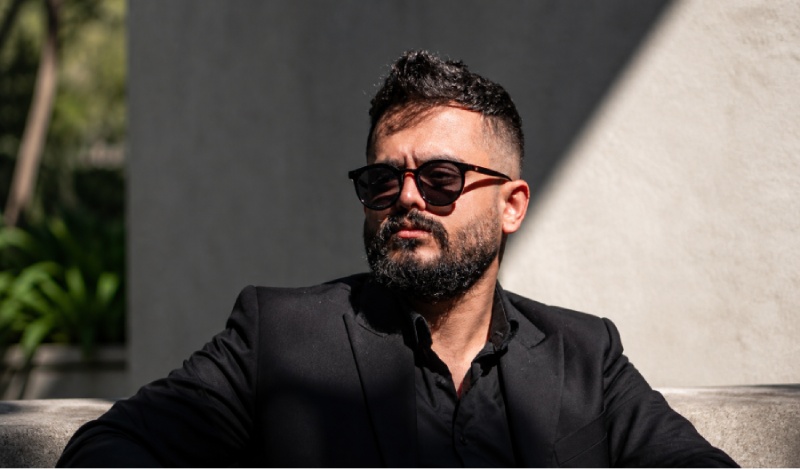
In an in-depth interview, the CEO of Kholaseh Agency breaks down the four pillars of Google’s content quality evaluation, declaring that the era of mass-produced, faceless content has come to a definitive end
As the digital world faces an ever-growing flood of AI-generated content, Google has rewritten the rules of the game in record time. The world’s leading search engine, through successive updates to its Search Quality Rater Guidelines, has elevated a framework called E-E-A-T to the very backbone of content quality assessment. This framework, an acronym for Experience, Expertise, Authoritativeness, and Trustworthiness, has become one of the most decisive factors in determining whether brands succeed or fail in search results today.
Mohsen Avid, CEO of Kholaseh Digital Marketing Agency, offers a comprehensive analysis of the framework: “Years ago, Google made it clear with the introduction of E-A-T that it would no longer rely solely on keywords and links. But the real shift came in 2022, when a second ‘E’ was added to the framework. That E, standing for Experience, was a turning point whose significance many SEO professionals initially failed to grasp. Today, however, it has become evident that the change was Google’s direct response to the explosion of AI-generated content.”
Why Has Google Suddenly Started Caring About the Author’s Identity?
According to Avid, the underlying cause of this transformation can be traced to a simple reality: the volume of content produced on the internet over the past two years exceeds the total content created throughout human history. When any user can generate dozens of articles in a matter of minutes, the only criterion left to distinguish valuable content from worthless noise is the credibility of the source and the author.
“Imagine walking through a vast library containing a billion books. How would you decide which ones are worth reading? You would look at the author’s name, the publisher, their track record, and their credibility. Google does exactly the same thing. Today’s algorithms search for the digital footprint of the author: Has this person written in this field before? Have other authoritative sources cited them? Do they have genuine practical experience in this domain, or are they merely paraphrasing what others have said?”
Avid believes this transformation has fundamentally redefined the relationship between content and identity in the digital world. In his view, the era when any website could rank with hundreds of unsigned, faceless articles has come to a definitive end.
The Four Pillars of E-E-A-T: From Experience to Trustworthiness
The CEO of Kholaseh explains the components of the framework: “The first letter, Experience, refers to firsthand, practical experience. When you write about the taste of a restaurant, Google wants to know whether you have actually been there or merely aggregated other people’s opinions. When you publish a product review, did you genuinely use the product? This has become enormously important in fields such as travel, tourism, product reviews, and buying guides.”
According to Avid, the second letter, Expertise, addresses the question of whether the author possesses sufficient knowledge to speak on a given subject. “In specialized fields such as medicine, law, engineering, or finance, Google effectively does not surface content written by non-experts in top results. This becomes doubly important for YMYL pages, or ‘Your Money or Your Life’ pages.”
The third pillar is Authoritativeness. Avid elaborates: “Authority means being recognized as an established source within your industry. This recognition is built through citations from other reputable sites, presence in specialized media, scholarly publications, and even quotes attributed to you in other sources. Authority is not something you claim about yourself; it is something the professional community grants you.”
The fourth and, in Avid’s view, most critical pillar is Trustworthiness. “Google itself has stated that trustworthiness is the most important factor among the four. The other three ultimately serve to build trust. Trustworthiness encompasses business transparency, factual accuracy, site security, privacy policies, real contact information, and even user reviews of the brand.”
YMYL Pages and Why Google Holds Them to a Higher Standard
One concept Avid links directly to E-E-A-T is YMYL. Pages that can affect a user’s health, financial security, well-being, or critical life decisions fall into this category, and Google applies far stricter standards to them.
“If you operate in fields such as medicine, pharmaceuticals, investment, law, political news, or even parenting, you have virtually no chance of ranking without fully observing E-E-A-T. At Kholaseh Agency, we offer clients in these fields a different strategy, one in which the role of the author, organizational credibility, and scientific sources matter just as much as the content itself.”
The Role of AI and the New Challenge for Brands
Avid argues that the rise of generative AI has transformed the E-E-A-T framework into a vital tool for Google. In his view, Google is using this framework to separate genuine human content from faceless, machine-generated material.
“I’m not saying Google opposes artificial intelligence; Google itself is the largest producer of AI tools. But Google opposes faceless content. That’s where the distinction lies. You can use AI as an assistant, but ultimately a real expert must oversee it, add their personal experience to it, and place their signature on it. Content that bears no human fingerprint will, in the near future, become effectively invisible.”
According to him, this also applies to AI-powered search engines. “Tools like ChatGPT Search and Perplexity also reference sources that carry credibility and a human signature. A brand weak in E-E-A-T will not only fail in traditional Google search but will also have no place in the new generation of search.”
What Should Be Done? Practical Strategies for Brands
Asked what brands should do to align with this framework, the CEO of Kholaseh offers several practical recommendations:
“The first step is the transparent introduction of authors. Every article should include the author’s name, photograph, resume, and professional background. The ‘About Us’ page should be authentic, comprehensive, and include information about the team. Second, building credibility through presence in reputable industry sources, what we call quality link building in off-page SEO, but this time not only for the domain but for the individuals behind it. Third, creating content based on genuine experience: reviewing products you have actually used, teaching skills you have personally mastered, and producing analyses drawn from firsthand data.”
Avid also stresses that source transparency is of particular importance. “If you cite a statistic in an article, name the source. If you quote a study, link to it. If you make a claim, support it with evidence. These small details collectively paint the picture of a trustworthy source, one that both Google and the user appreciate.”
Conclusion: The Future Belongs to Brands With Identity
The CEO of Kholaseh concludes: “I believe E-E-A-T is not merely a technical framework for ranking; it is a philosophy. A philosophy that says, in a world full of noise, only credible voices will be heard. Brands that think they can succeed in search results by mass-producing faceless content are fighting yesterday’s war. The future belongs to brands that have identity, expertise, authority, and the ability to build trust.”
He closes with a recommendation: “I tell business leaders: before investing in producing more content, invest in building identity and credibility. Ten articles from a credible, expert author are worth more than thousands of unsigned, anonymous ones. This is one of the most important lessons the recent years of SEO have taught us.”
