
Ankur Verma on the Engineering Challenges and Global Outlook of Healthcare Drone Delivery

Ankur Verma, Co-Founder and Chief Technology Officer of Bulbul Inc., is among the innovators exploring how autonomous drone logistics could reshape healthcare supply chains. As interest in drone delivery continues to grow worldwide, engineers and aviation technologists are increasingly focused on solving the complex challenges required to move autonomous aerial systems from experimental pilots to real-world infrastructure.
Over the past several years, drone technology has evolved rapidly. Improvements in autonomous navigation, flight control systems, and battery performance have made aerial logistics a serious area of exploration for industries ranging from retail to emergency response.
Market analysts now project that the global drone delivery market could grow significantly over the next decade, with several forecasts estimating the sector could exceed $30 billion globally by the early 2030s as regulatory frameworks mature and commercial adoption accelerates.
Among the industries expected to benefit most from this transformation is healthcare.
Hospitals and medical laboratories frequently transport diagnostic samples, medications, and specialized medical supplies between facilities. These deliveries are often time-sensitive, yet traditional ground transportation can introduce delays due to traffic congestion or geographic distance.
Autonomous aerial delivery systems have the potential to address some of these challenges by creating direct transportation routes between healthcare facilities.
“Healthcare logistics requires both speed and reliability,” Verma explains. “Autonomous aerial systems have the potential to create new delivery pathways between healthcare facilities while reducing transportation time for critical supplies.”
Industry observers note that drone logistics is progressing through several phases of development. Early efforts focused primarily on demonstrating that drones could complete individual deliveries. The next stage involves building systems capable of operating consistently and safely as part of broader logistics networks.
This transition introduces several technical and operational hurdles.
Autonomous aircraft must operate safely in complex environments that include urban airspace, changing weather conditions, and evolving aviation regulations. At the same time, drone delivery systems must integrate seamlessly with existing supply chain and healthcare workflows.
According to Verma, addressing these challenges requires advancements not only in aircraft hardware but also in the software systems that support autonomous operations.
“Reliable aerial logistics requires a combination of autonomous navigation, operational safety frameworks, and mission management platforms,” he says. “The objective is to build systems that can function predictably and safely in real-world conditions.”
Bulbul Inc., headquartered in Irvine, California, is currently in the early stages of developing its autonomous drone logistics platform.
The company is focused on building aerial delivery systems designed specifically for healthcare-related logistics, with the goal of enabling faster transport of medical materials such as laboratory samples and critical medical supplies.
Bulbul is also exploring potential pilot collaborations with healthcare stakeholders in Southern California, including discussions with Southwest Healthcare’s Temecula Valley Hospital.
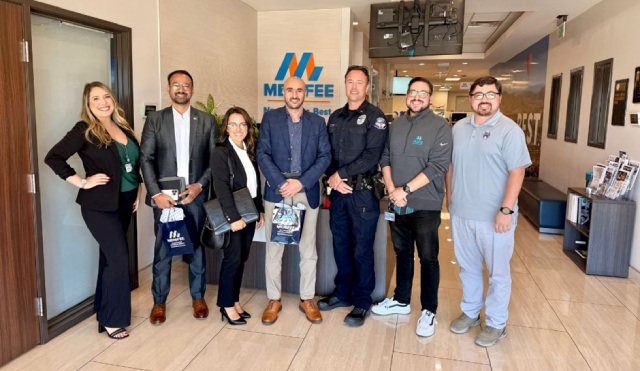
Regional institutions have expressed interest in supporting emerging transportation technologies as well. The City of Menifee and EDC Southern California Wine Country have encouraged innovation in autonomous logistics infrastructure within the region.
Beyond operational development, Verma’s work includes three patents filed in drone logistics technologies, along with research publications related to autonomous aerial systems.
These developments reflect a broader shift taking place across the drone delivery sector. As aviation regulations evolve and technological capabilities improve, many analysts believe autonomous aerial logistics could become an increasingly important component of modern supply chains.
For emerging companies working in this field, the current phase of development is focused on building the technological and operational foundations required for long-term deployment.
“Drone logistics is still in its early stages globally,” Verma says. “But the progress being made today is helping establish the groundwork for systems that could eventually become part of everyday infrastructure.”
Learn more about Bulbul Inc.:
https://bulbuldelivery.com
Connect with Ankur Verma:
https://www.linkedin.com/in/ankurverma200
